How to build the Ancient City Shrine in Minecraft
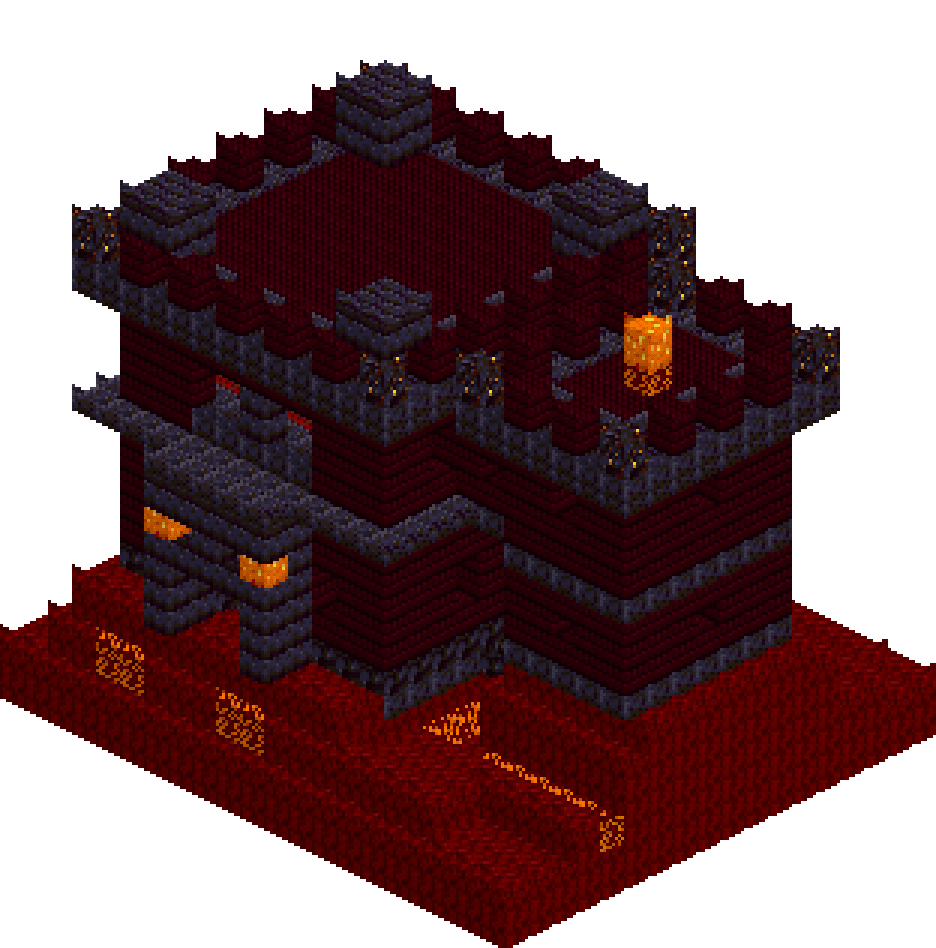
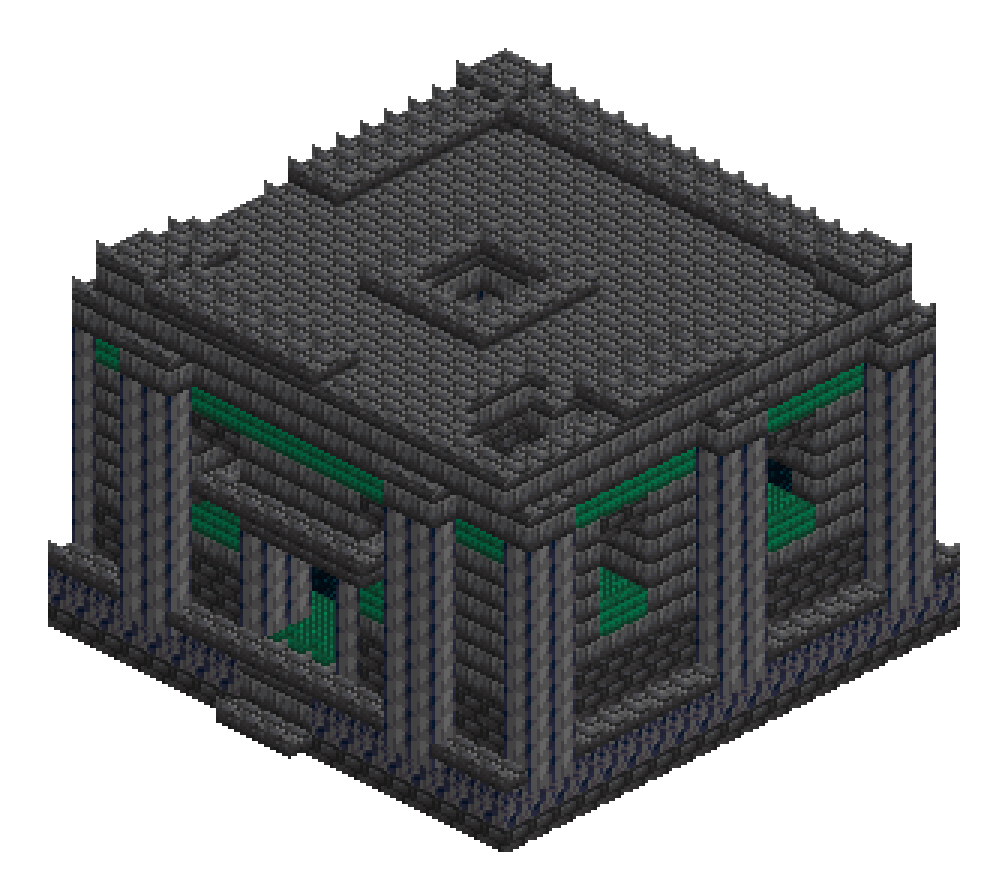
A ruin, not a building. The shrine stands behind a deepslate wall that has already come down in steps — a tall central bay with a soul-lit niche, a lower west wing, an east end reduced to rubble — and in front of it the court sinks two blocks into the terrace. Its floor is dark prismarine going black under a crust of sculk, with one cold light burning at the centre. One column still carries its capital; its twin is a stump, and the shaft it lost lies across the far rim. Nothing lines up, nothing is finished, and the east retaining wall has burst so the court drains out over the rubble. Sink it into a cavern floor and it looks found rather than placed.
What you need
| Block | Count |
|---|---|
| Deepslate bricks | 910 |
| Deepslate tiles | 882 |
| Polished basalt | 325 |
| Smooth basalt | 313 |
| Deepslate bricks slab | 180 |
| Dark prismarine | 168 |
| Sculk | 117 |
| Sea lantern | 11 |
| Soul sand | 11 |
Counts are exact for the model above. Mine a little spare — nobody places every block first time.
Building it
Each stage names the layers it covers. Drag the slider on the model to that layer and you are looking at exactly what the stage describes.
1.Plinth and the sunken court
Two solid courses first, 19 by 19: deepslate tiles at y0, smooth basalt at y1. Nobody ever sees the middle of them, but they are what lets the court sink without leaving a hole in the world, and the basalt band is the only bit of the plinth that shows at the edge. Now mark the court — nine by nine, x9,z8 to x17,z16 — and lay sculk across that whole footprint at y1 before you dig the middle out. Clearing the inner seven by seven then leaves a one-block step all the way round with a black rim, and the drop reads as depth rather than as a mistake. Floor the inside in dark prismarine, cut a small sculk figure into it, and set one sea lantern dead centre. That lantern is the only bright thing in the build, so nothing else is allowed to compete with it.
2.Terrace, kerb and processional aisle
Pave x2,z1 to x18,z17 in deepslate tiles, then stop treating the floor as a floor and start treating it as a drawing. A deepslate brick kerb runs along the two sides that face the court. A two-wide dark prismarine aisle comes in from the west steps, runs the length of the terrace and turns along the foot of the wall. Everything else stays plain, then gets damaged: pull three single blocks out so the basalt fill shows through, drop smooth basalt where feet would have worn a path, and cluster sculk in patches of four or five near the collapse instead of sprinkling it evenly. Finish by clearing the whole east corner — terrace, plinth and all — from x17,z12 outwards. The retaining wall burst there, the court drains out over the rubble, and from the open corner you can finally see the floor you just laid.
3.Wall foot, altar and column bases
Everything that touches the ground takes the darker stone: two courses of deepslate tiles under the north wall and the same under the west wall, so the building looks planted rather than dropped. The altar is a five-by-two polished basalt plinth with a deepslate brick body and a dark prismarine top, sitting on the axis of the central niche with a sea lantern in its face. Each column gets a flared foot of deepslate brick slabs, four by four, with the two-by-two shaft starting inside it — a half-height flare reads as a moulding where a full block reads as a crate. Then spill rubble down the east side and out through the breach: loose blocks at floor level, no two neighbours the same material, and a couple stacked two high so the pile has a shape.
4.Niches, banners and the shafts
The wall body is deepslate brick — deliberately lighter than the tiled floor, so the wall reads as figure against ground. Cut the shrine niche into the tall bay: three wide, five up, one block deep, with a single block clipped out of the head to point it, and the back face lined with sculk. Soul sand along the sill, one sea lantern above it. A smaller niche either side, the eastern one torn wide open where the wall failed. Hang two light grey wool banners in the west bay from a deepslate brick corbel, one shorter than the other, because two of the same length looks like a pattern. The column shafts climb in polished basalt, the palest stone here; the north-east one stops at y6 as a jagged stump. Leave the walkway itself unlit — the niches are the only light, and the shadow between them is the whole effect.
5.Bringing it down
A ruin only reads if the collapse has a direction. The north wall keeps full height over the central bay alone. The west wing stops two courses lower with a tile band and a slab cap. The east wing goes down in three steps — y11, then y8, then nothing — until the last stretch is bare base course and then bare floor. The east pilaster goes with its wing: cut it at y10 and cap the stump with smooth basalt so the break has a different texture. The west wall repeats the trick walking south, dropping twice before it disappears entirely at z13. Two rules make this look right: never break two edges at the same height, and never break one mid-course. Stone fails along its bed joints, so every step is a flat, honest ledge.
6.Capitals and the last light
Cap each standing column with a two-by-two deepslate brick block, then a four-by-four slab abacus over it. The half-height overhang gives the column a proper top without the lump a full cube would leave. A slab course finishes the tall bay of the wall at y14, two above the west wing, so the silhouette has a clear high point. The one flourish is a short beam stub cantilevered off the north capital, snapped after two blocks with a smooth basalt end to show the fracture. Then stand back and count your lights: nine sea lanterns, all of them inside a niche, in the altar, on the court floor or at the steps, and not one of them out in the open. If the court looks flat, it is because something bright is sitting where it ought to be dark.
Make it yours
- Sea lanterns stand in for the cold light of the deep dark. If you have soul soil, set soul fire on the soul sand in each niche instead and pull the lanterns out — the niches flicker blue and the walkway stays properly black.
- Sculk only comes home with you if you mine it with Silk Touch; struck with anything else it drops a little experience and nothing at all. A hoe is the fast tool for it, so bring an enchanted one before you strip a city.
- Dark prismarine is eight prismarine shards and a black dye per block, so the court floor alone wants well over five hundred shards. Farm guardians before you start, or swap the inlay for warped wart blocks and accept a warmer teal.
- Keep sculk in clumps of four or five spreading out of the burst corner and the pit. Single blocks dotted evenly across the floor read as a texture error; clustered blocks read as something alive that got in through the crack.
- Build it into a cavern floor rather than an actual deep dark biome. Real shriekers will call a warden while you are stood there placing blocks, and no amount of moody lighting is worth that walk back for your stuff.
- Leave the two rows of court floor nearest the open corner free of rubble. Anything you stand there hides the inlay from exactly the angle you will end up screenshotting the shrine from.