How to build the Enderman Statue in Minecraft
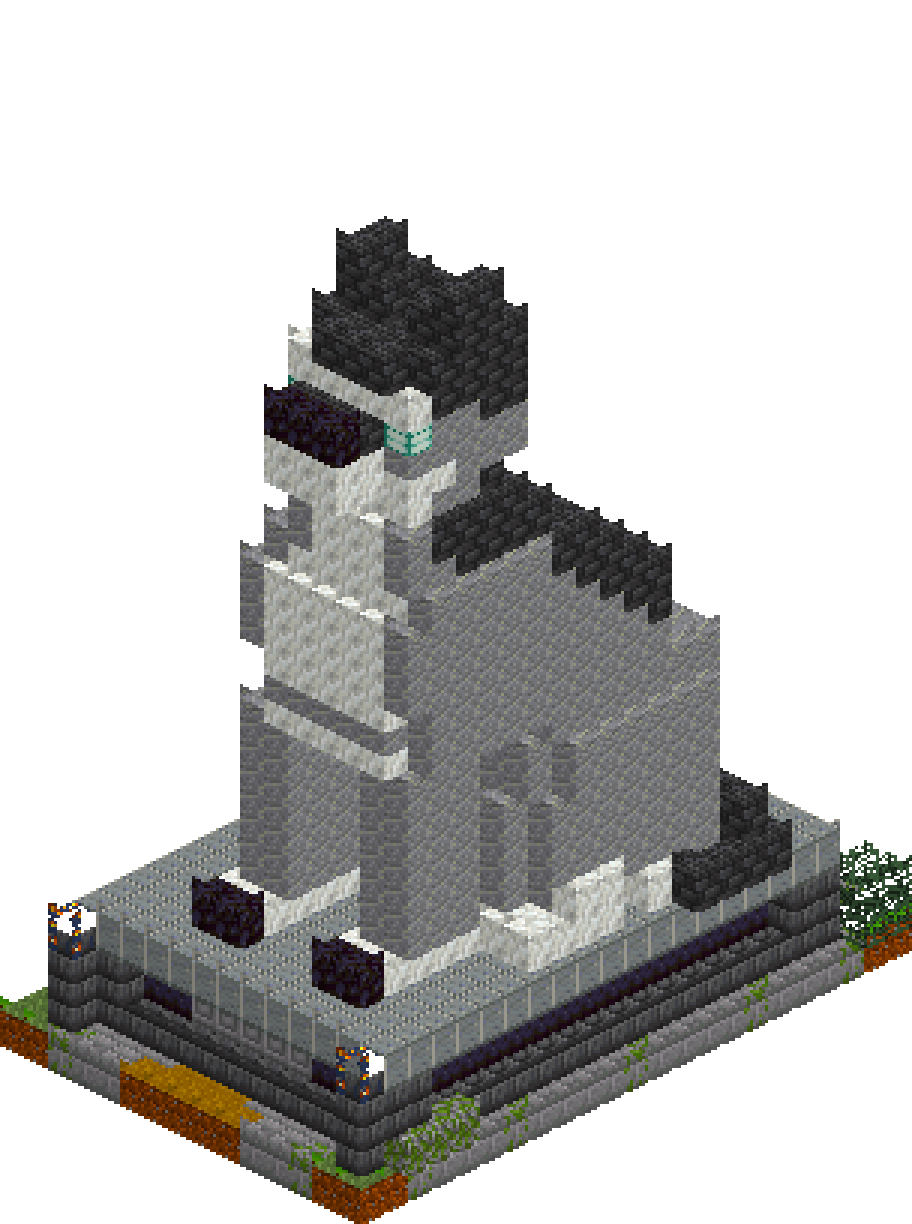
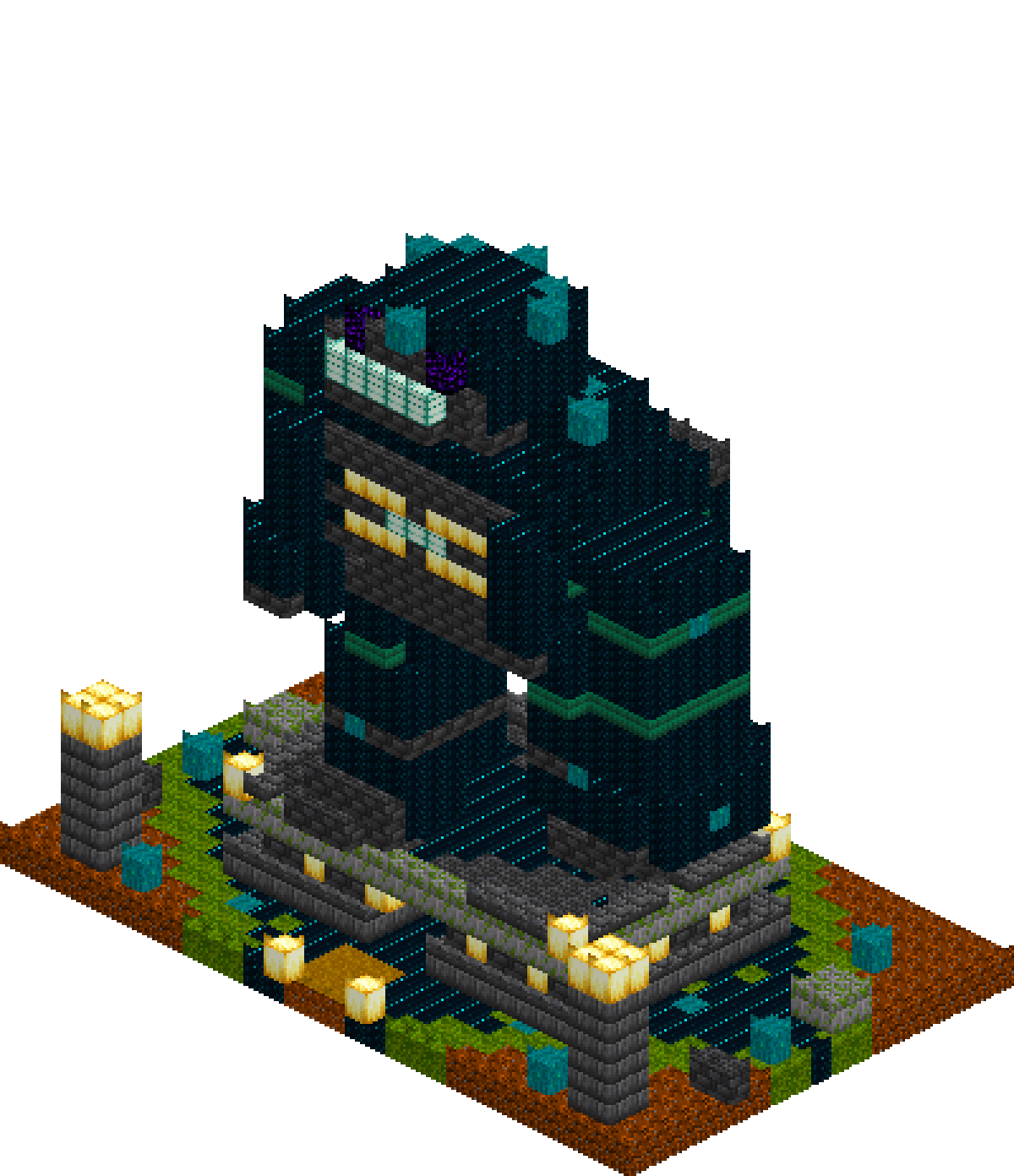
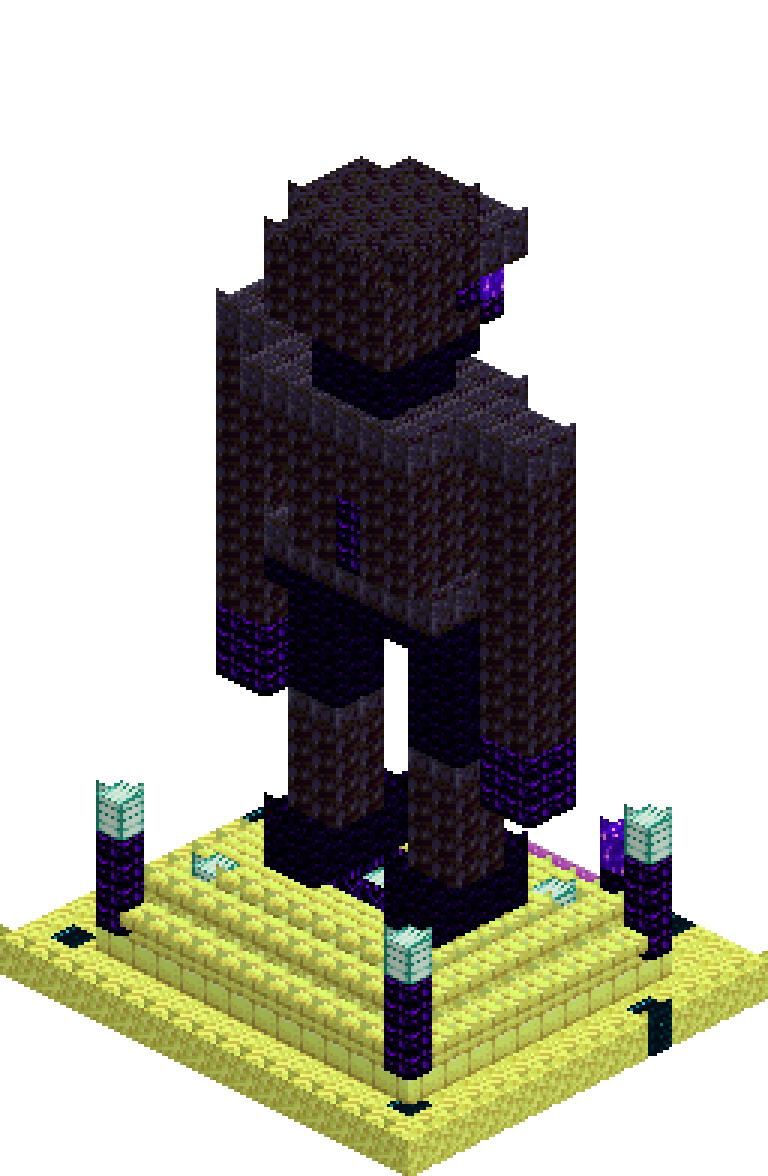
An enderman is all silhouette: a body you could hide behind a fence post, legs that go on forever, arms swinging somewhere below the knee, and two purple eyes floating in the dark. None of that survives if you fill the space in. This one stands twenty-eight blocks clear of a stepped end stone plinth — blackstone limbs, obsidian thighs, feet, jaw and neck, crying obsidian at the hands and down the spine, and an amethyst stare set under a projecting brow. Three blocks of daylight run between the legs and a clear column of air separates each arm from the ribs, so it reads as a figure from every angle instead of a black tower.
What you need
| Block | Count |
|---|---|
| End stone bricks | 329 |
| Blackstone | 322 |
| End stone | 199 |
| Obsidian | 139 |
| Polished blackstone | 86 |
| End stone bricks slab | 76 |
| Crying obsidian | 60 |
| Purpur block | 9 |
| Sea lantern | 9 |
| Sculk | 6 |
| Amethyst block | 6 |
Counts are exact for the model above. Mine a little spare — nobody places every block first time.
Building it
Each stage names the layers it covers. Drag the slider on the model to that layer and you are looking at exactly what the stage describes.
1.Plinth, path and uplighting
Lay the ground first: end stone across the whole footprint, an end stone brick apron, a three-wide purpur path running in from the front, and a few blocks of sculk scattered into the field so the ground is not one flat colour. Then step the plinth — 13x11 bricks at y=1, a ring of end stone brick slabs at y=2 with paler end stone inside it, a second slab ring at y=3 with a brick deck inside that. Two courses, two trim rings, and the base already throws a shadow line. Sink sea lanterns into the four deck corners so the figure is uplit, pool crying obsidian where the legs will straddle, and stand crying obsidian posts capped with sea lanterns at the plinth corners.
2.Legs, and the daylight between them
Two columns only: x=5-6 and x=10-11, both two deep at z=6-7, running twelve courses to y=15. Between them leave x=7, 8 and 9 completely empty for the whole height — three blocks of daylight, wider than either leg. That gap is the single thing that makes an enderman an enderman, and it is the first thing people fill in by accident, so clear it back to air before moving on. Band the material rather than the shape: blackstone shins, a polished blackstone knee at y=10, obsidian from y=11 up so the thighs darken into the hips. Finish with feet at y=4-5 spread to z=5-8, four deep against the leg two, which stops the columns reading as fence posts.
3.Hips, waist and a chest with depth
The torso stays three deep the whole way up, z=6-8 — endermen are thin front to back, and holding that depth is what keeps this from becoming a chimney. Hips at y=16-17 span the full seven, x=5-11, capped with a polished blackstone belt. Then pinch: the waist at y=18-21 pulls in to x=6-10, leaving x=5 and x=11 as air on both flanks. Run a crying obsidian stripe up the centre front and another down the spine so the panel has a seam. At y=22 the chest steps back out to seven wide and five deep, z=5-9, overhanging the waist on all four sides and putting real shadow under the armpits. Cap y=24 with a polished blackstone crest carried out to x=2 and x=14 — that one course is the yoke the arms hang from.
4.Arms hung clear of the ribs
Build the arms after the yoke exists, never before, or you will be guessing the height. Each is two by two — x=2-3 and x=13-14 at z=6-7 — dropping from y=23 down to y=10, six courses below the hips. Long arms are the pose; short ones give you a snowman. Now the part that decides it: x=4 and x=12 stay empty from y=9 to y=23, one unbroken column of air between each arm and the ribs, top to bottom. Clear it deliberately and then sight down it. Make the bottom three courses of each arm crying obsidian so the hands look like they are coming apart into particles.
5.A neck narrower than both ends
Two courses, three by three, x=7-9 and z=6-8, in obsidian. It sits on a shoulder crest thirteen wide and carries a head five wide, so it is narrower than the mass below it and the mass above it — which is the entire job of a neck, and the detail every failed statue leaves out. Obsidian rather than blackstone because it reads darker, letting the neck sink into shadow so the head appears to float above the shoulders.
6.Head, brow and the purple stare
Five courses, and each one does something. y=27 is the jaw: obsidian, five wide but only three deep at z=6-8, overhanging the neck sideways. y=28 widens to the full 5x5 at z=5-9, cantilevering out over the jaw front and back to give the undercut beneath the chin. y=29 carries the face — amethyst at x=6, 7, 9 and 10 with a blackstone bridge between the pairs, and crying obsidian wrapped round the corners at z=6 so the glow bleeds onto the temples. y=30 is a polished blackstone brow pushed a block further forward to z=4, hanging over the eyes. y=31 caps it, chamfered at z=5 and z=9 so the crown is not a plain cube.
Make it yours
- Stand thirty blocks back before you finish the second leg. If you cannot see plinth through the gap at x=7-9, the legs are too fat — shave a column off each rather than widening the gap, or the figure turns stocky.
- Blackstone and obsidian look near-identical at midday and pull apart at night, obsidian catching the purple while blackstone stays matt. Reserving obsidian for the thighs, feet, jaw and neck gives the figure joints for free.
- The brow at y=30 sits one block proud of the face at z=4. That overhang does half the work — without the shadow it throws, amethyst eyes just look painted on.
- For eyes that genuinely light, carve out the blocks behind them at z=6 and hide a sea lantern in the cavity, then swap the amethyst for purple stained glass. The head is solid enough to lose two blocks.
- Endermen travel in groups. Mirror a second statue across the purpur path about twenty blocks over and raise one of its arms up to the yoke line — two figures turn a monument into a gateway.