How to build the Mushroom Village in Minecraft
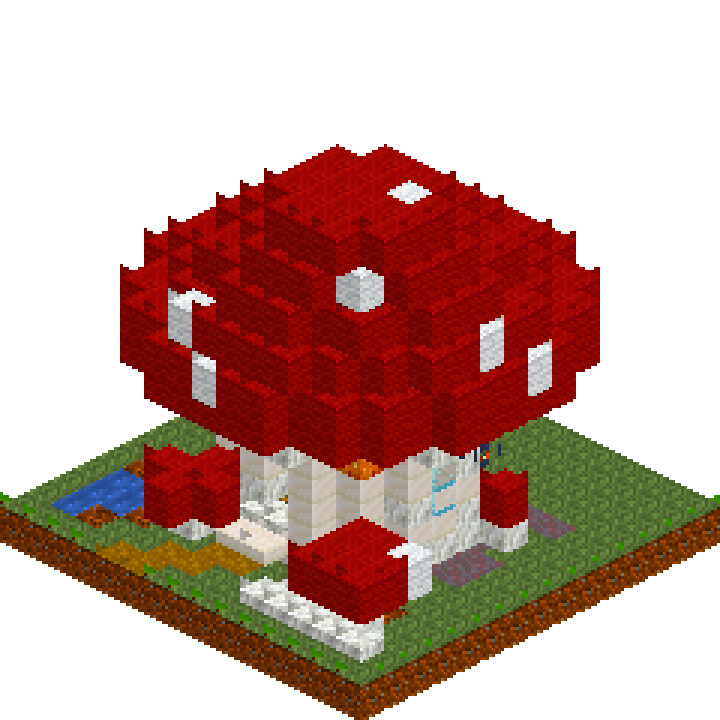
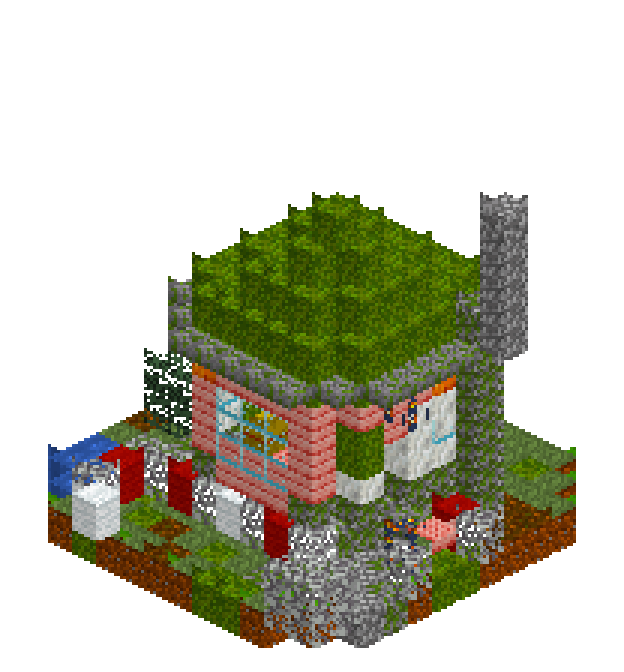
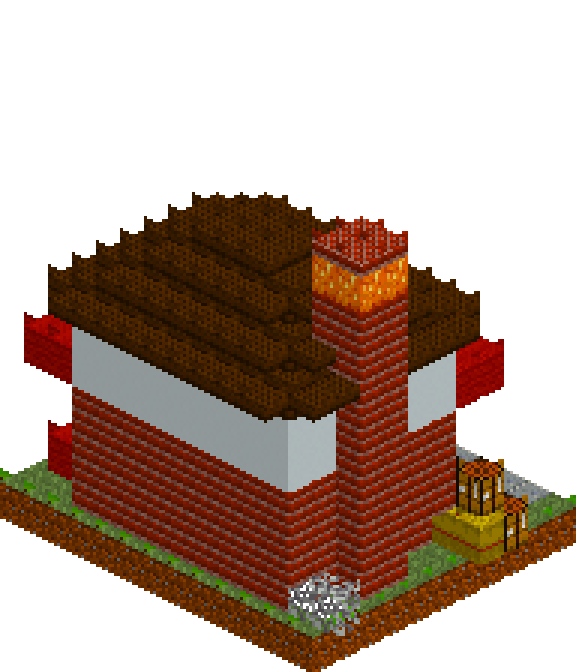
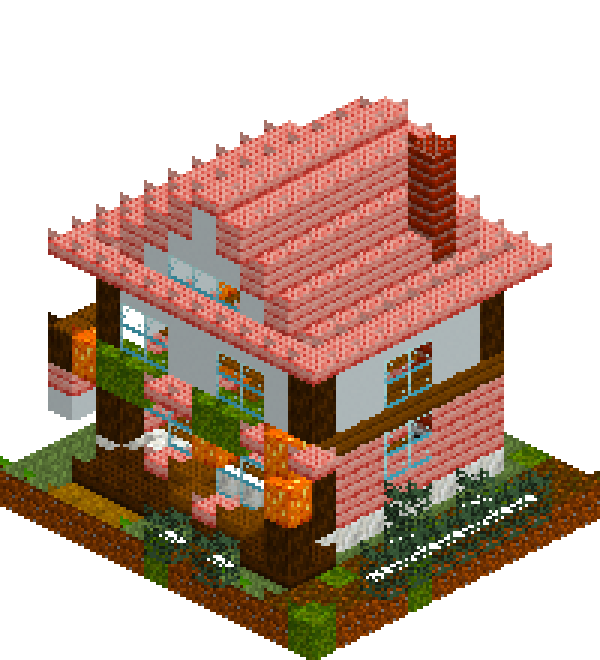
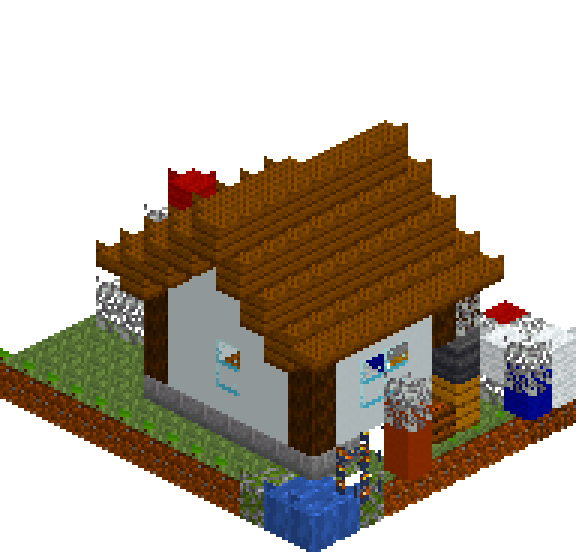
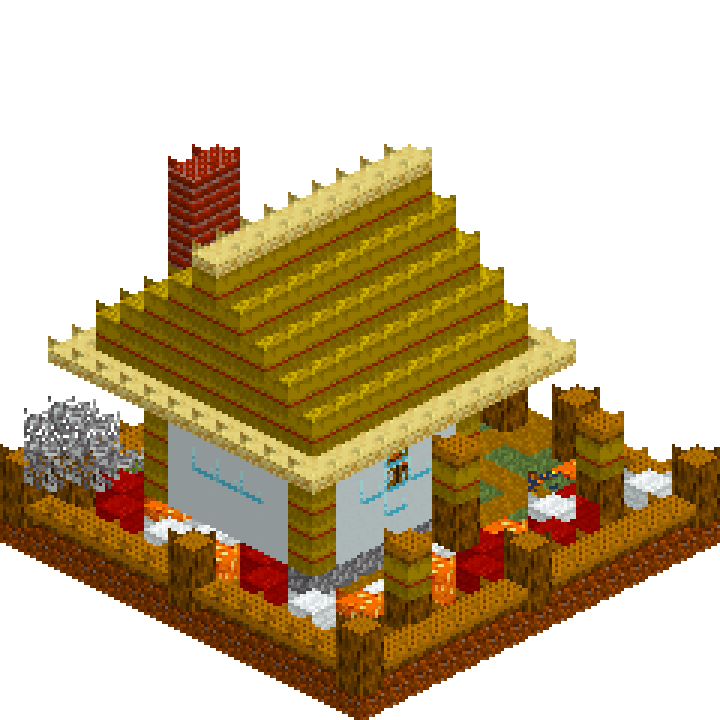
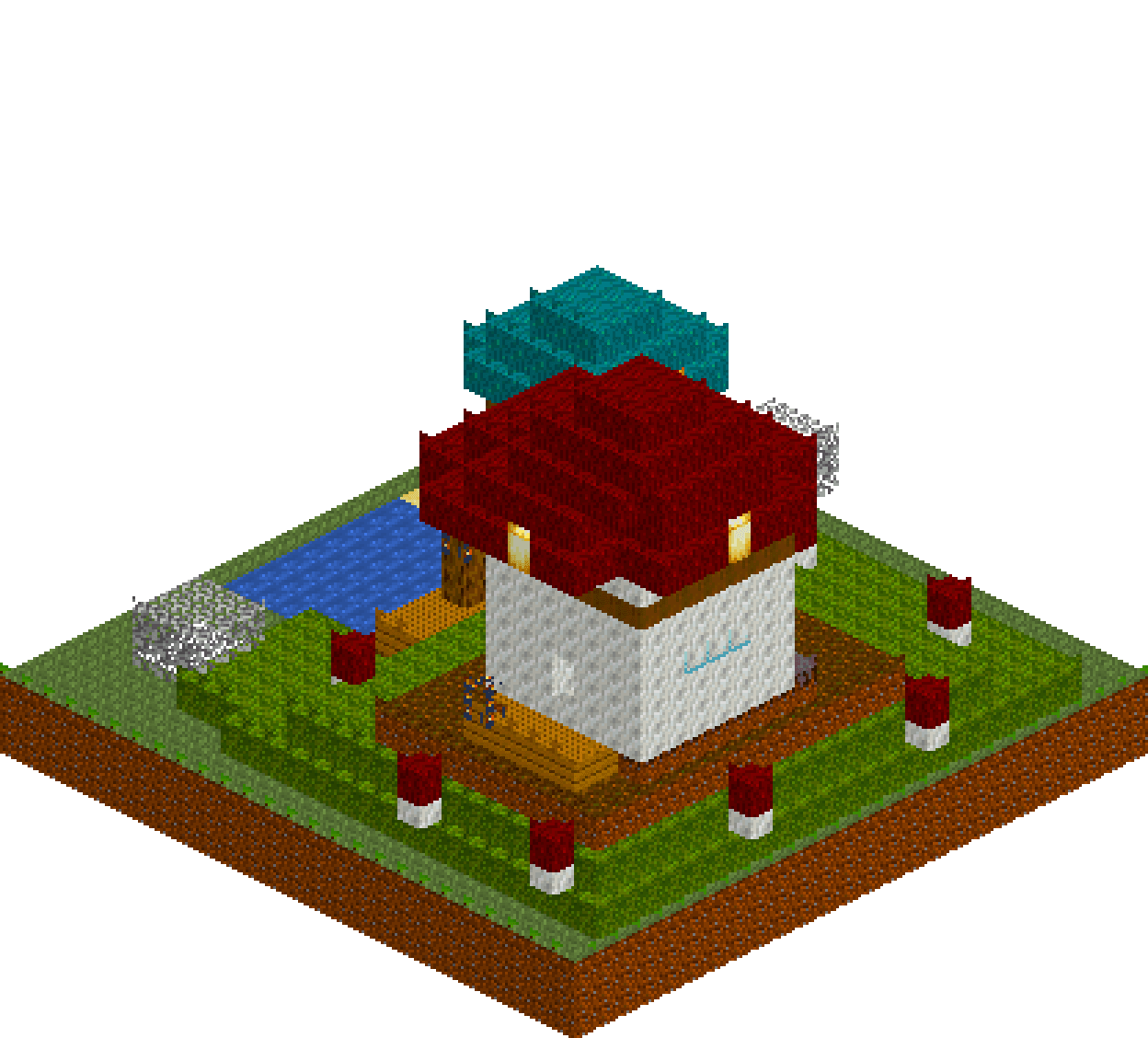
A hamlet built the way mushrooms actually grow: one stem short and squat beside the water, one halfway up the slope with its doorstep over the pond, and one tall on the crown of the mound wearing a cap eleven blocks across. Calcite stems, wart-block caps and a stripped-log band under each brim do most of the work. The rest is circulation — a plank boardwalk on posts, a slab step onto the terrace, froglight glowing in the caps after dark. It reads as a village rather than three separate builds because the walkways drag the eye between them.
What you need
| Block | Count |
|---|---|
| Dirt | 1310 |
| Moss block | 618 |
| Grass block | 586 |
| Calcite | 359 |
| Nether wart block | 253 |
| Podzol | 130 |
| Dripstone block | 95 |
| Warped wart block | 77 |
| Water | 70 |
| Mycelium | 56 |
| Stripped spruce log | 56 |
| Spruce planks | 43 |
| Clay | 42 |
| Oak leaves | 36 |
| Oak planks | 32 |
| Sand | 18 |
| Dirt path | 10 |
| Oak log | 9 |
| Glass | 7 |
| Froglight | 5 |
| White concrete | 4 |
| Oak planks slab | 3 |
| Lantern | 2 |
| Shroomlight | 2 |
Counts are exact for the model above. Mine a little spare — nobody places every block first time.
Building it
Each stage names the layers it covers. Drag the slider on the model to that layer and you are looking at exactly what the stage describes.
1.The mound, the pond and the path
Two courses of dirt, a lid of grass, then four shrinking layers stacked on top: moss at y3 and y4, podzol at y5, mycelium on the crown at y6. Each layer sits fully inside the one below, so nothing floats and the flanks read as terraces instead of a wall. Push a moss spur out to the south-west so the outline stops being a pile of rectangles. Carve the pond out of the low ground, set water flush with the grass and lay a clay bed underneath — clay reads pale and clean through a block of water where dirt just goes muddy. Sand on the north bank and a dirt path leading off the lowest doorstep finish the ground.
2.Three stems at three heights
Every stem goes in solid, gets banded, then is hollowed out. Fill the calcite box, drop one course of stripped spruce log a block below the ceiling, then clear the inside — the band survives as a ring you could never place with a hollow box, and it gives a plain white stem a waistline. Spruce planks over the calcite for floors. The small home stands on the grass, the middle one perches at the water's edge, and the big one sits on the mycelium crown, eight tall with a five-by-five room inside. Cut doors two high and drop windows in as three-wide glass slits straight into the calcite; no clearing first.
3.Caps that overhang
A round cap layer costs two boxes, not twenty: one wide-and-shallow box across x, one narrow-and-deep across z, and the overlap gives an octagon. Stack octagons shrinking by two a course — eleven, nine, seven, five, three on the big cap — and you have a dome. Push the widest course a block past the stem on every side so the brim overhangs and throws a shadow ring right round the house. Warped wart for the low home, dripstone for the middle one, nether wart for the crown, so the three read as different species rather than three copies.
4.Boardwalk, steps and terrace
Work out standing heights before placing a single plank. The deck sits at y4 on two oak posts driven into the pond, one step below the middle home's threshold, so one plank block at y5 becomes its doorstep. Out of the south door the ground climbs on its own — podzol at y5, mycelium at y6 — so the top home only needs a run of plank slabs and one plank block at y7 to meet its floor. The terrace tucks under the big cap's overhang on the south side with its own door onto it.
5.Froglight, toadstools and planting
Light belongs where people stand: a froglight set into the wall above each door so the glow spills across the threshold, lanterns on the boardwalk post and the terrace rail line, and spots of shroomlight, froglight and white concrete knocked off-centre into the caps so the village hovers at night. Then scatter toadstools — one calcite block with a nether wart cap — around the foot of the mound where only the lowest terrace shows. A leaf bush at the water and one small oak by the low home stop the mushrooms being the only living thing on the mound.
Make it yours
- Two overlapping boxes — wide in x, deep in z — give an octagon, which is as round as an eleven-block cap ever needs to be, and it saves fifty single-block placements per layer.
- Build the stems solid, lay the log band, then hollow them out. Carving afterwards leaves the band as a perfect ring; a hollow box will never give you that.
- Count standing height, not block height: a floor block at y5 means you walk at y6, so doors have to start there or the step in will always feel wrong.
- Keep cap spots off-centre and mix the block — white concrete for the plain ones, shroomlight and froglight for the two or three that should still be visible at midnight.
- Clay on the pond floor is worth more than anything you plant on the bank; it stays pale through the water where dirt and gravel just muddy the colour.