How to build the Astronomer Observatory in Minecraft
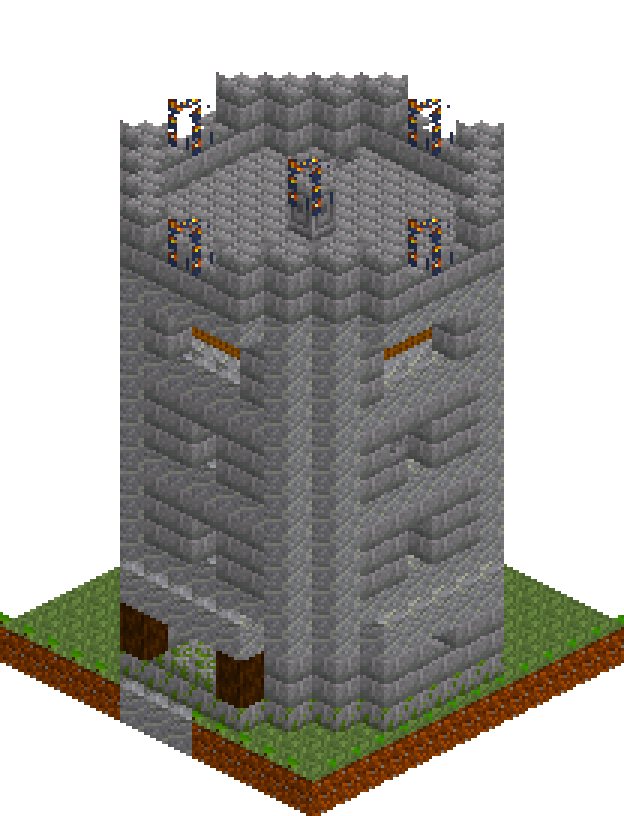
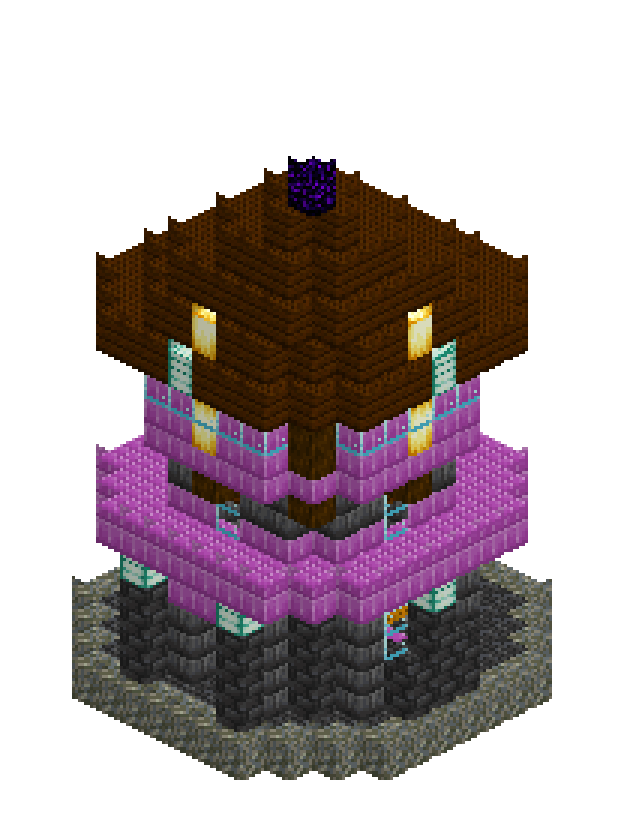
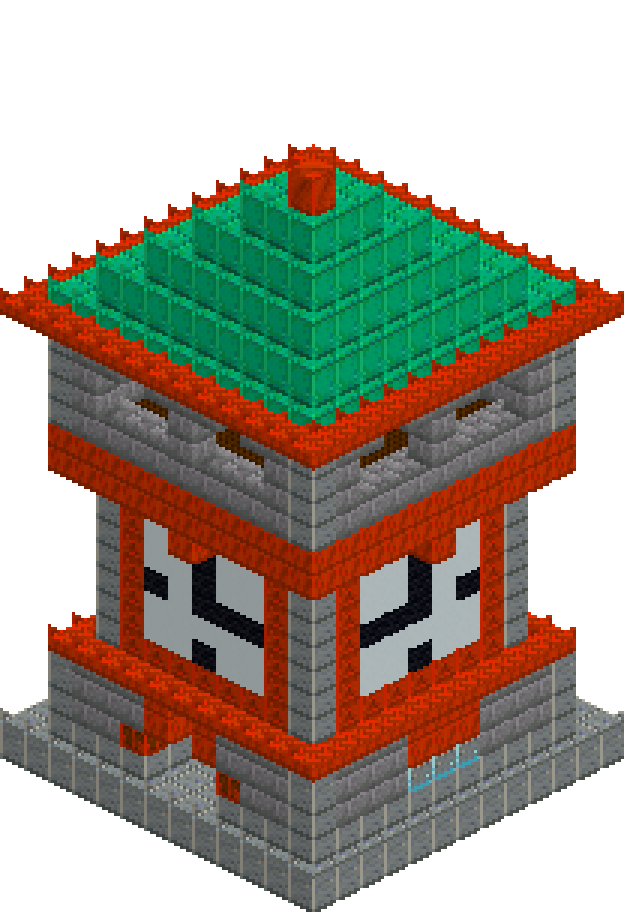
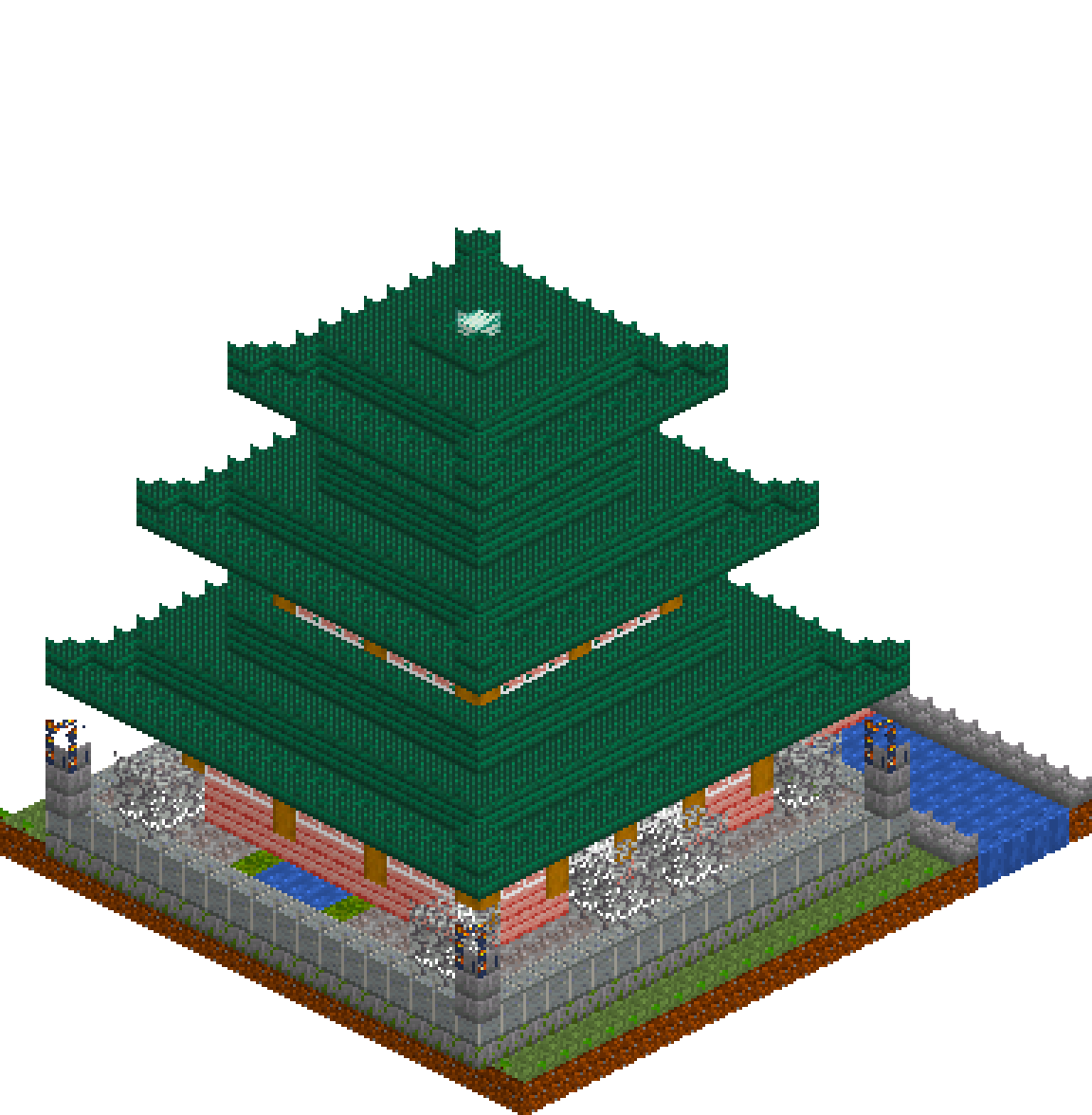
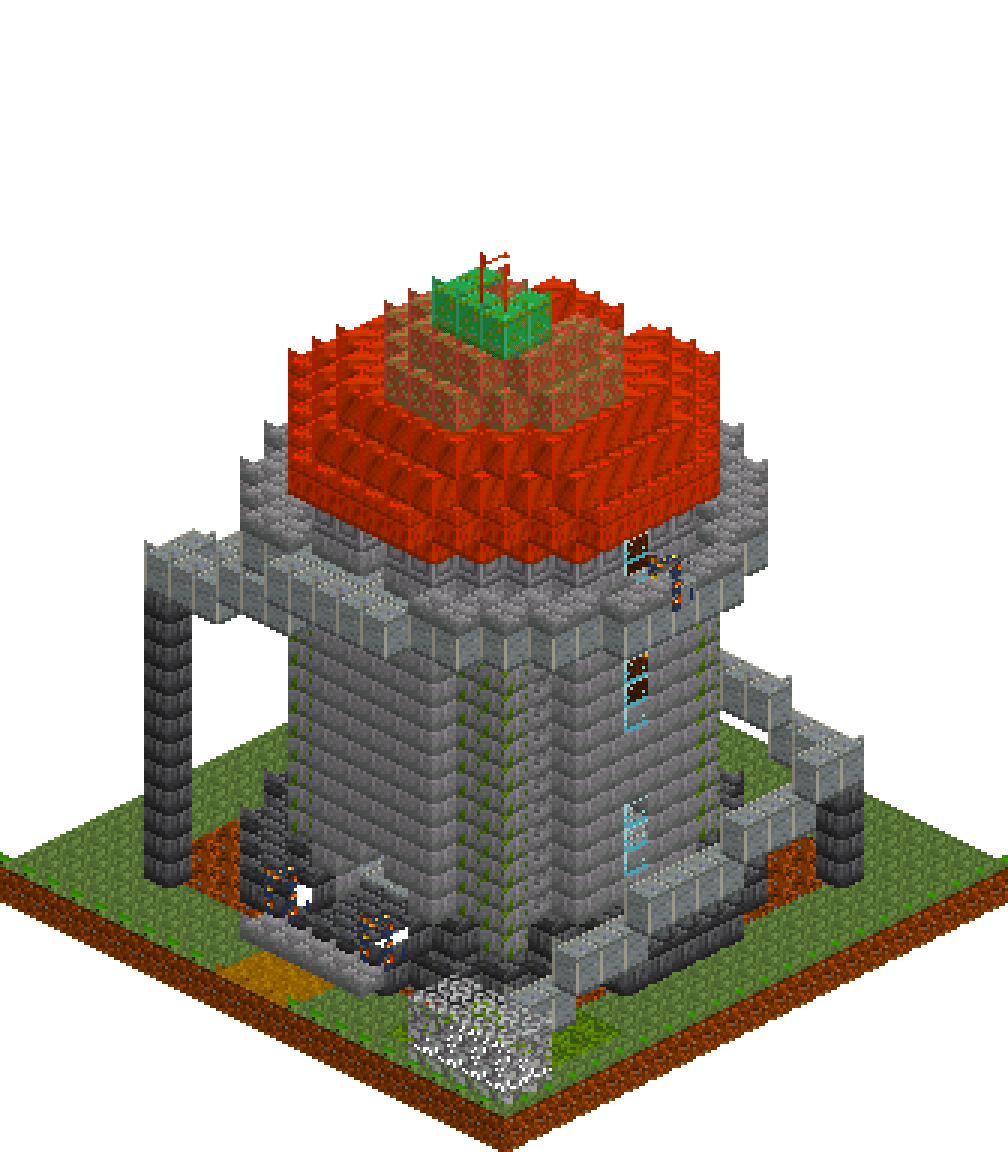
An observatory is the rare build that earns its height. The shape does the work: a plain round shaft, a railed balcony you can actually stand on, and a copper dome that everybody reads instantly as a telescope hood. The dome here is built the honest way, in rings — each course one flat cross-section, a block narrower and a block higher than the last — with a three-wide slot cut through the north flank so the sky gets in. An external ramp spirals the shaft so the silhouette never sits still, corner columns catch the shadow, and lantern-lit steps bring you in at the foot.
What you need
| Block | Count |
|---|---|
| Stone bricks | 286 |
| Coarse dirt | 207 |
| Polished andesite | 196 |
| Grass block | 178 |
| Deepslate bricks | 157 |
| Dark oak planks | 122 |
| Mossy stone bricks | 100 |
| Cut copper | 61 |
| Copper block | 54 |
| Cracked stone bricks | 52 |
| Moss block | 50 |
| Stone bricks slab | 45 |
| Spruce leaves | 25 |
| Glass | 24 |
| Chiselled stone bricks | 24 |
| Exposed copper | 22 |
| Bookshelf | 20 |
| Oak leaves | 16 |
| Lantern | 9 |
| Dirt path | 6 |
| Weathered copper | 6 |
| Spruce log | 5 |
| Glowstone | 4 |
| Cut copper slab | 4 |
| Polished blackstone | 2 |
| Lightning rod | 1 |
Counts are exact for the model above. Mine a little spare — nobody places every block first time.
Building it
Each stage names the layers it covers. Drag the slider on the model to that layer and you are looking at exactly what the stage describes.
1.Ground, plinth and the lantern steps
Lay the grass, then scuff a coarse dirt yard through the middle of it so the tower is standing on worn ground rather than lawn. Moss in two corners, a spruce and an oak clump on the diagonals, a dirt path running out to the south. The plinth is a filled 15-wide circle of deepslate bricks at y1 — one layer op, and it settles the whole build. At y2 a second, narrower deepslate ring steps in to make the base read as two courses instead of one slab, with a gap left at the front for the doorway and two gateposts either side of it. A slab step at z18 and a lantern on each post do the arrival.
2.The round shaft, corner by corner
An 11-wide circle is four straight runs and four chamfered corners, so it is twelve boxes rather than a hundred blocks: north and south caps at z5 and z15, east and west walls at x5 and x15, then eight single-column corners stepping in diagonally. Run every one from y2 to y18 in a single op. The corner columns are where rain runs, so those get the mossy and cracked bricks — damage in the right place reads as age, damage everywhere reads as noise. Four mossy colonnettes stand in the corner notches from y2 to y13 and later carry the balcony overhang.
3.The ramp that wraps the tower
A true helix costs hundreds of blocks; a square helix costs four. Each side is one line op climbing four blocks as it crosses thirteen, starting at the south-east on the ground and turning anticlockwise — east face, north face, west face, then a short final flight onto the balcony. Corners are picked up by the next line so the walk is continuous. Three deepslate piers under the turning points stop it floating and add vertical accents that break the round shaft from every angle. Polished andesite keeps the walking surfaces one material, ramp and balcony alike.
4.Balcony, parapet and drum
At y14 the observation floor goes in as one layer, with copper slab corbels capping the four colonnettes. y15 is the balcony: a filled 15-wide circle minus the room, so the deck wraps the shaft two blocks wide all the way round. y16 is the parapet — the outermost ring only, in stone brick slabs so it reads as a rail rather than a wall, with lanterns at three points and the south side left open where the ramp arrives. Above that, y17 in chiselled stone brick and y18 in cut copper turn the top of the drum into a proper springing course for the dome.
5.Copper dome and the sky slot
Six layers, each one block narrower and one block higher: a 13-wide eave overhanging the drum at y19, then 11, 9, 7, 5 and a small cap. Every course is a one-block ring, so the dome is a shell and the room below stays open to it. Cut the slot by simply leaving the three centre columns out of the north side of each ring — it opens from the eave right up to just under the apex, and the cap oversails it like a hood. Grade the metal as it climbs, cut copper to copper block to exposed to weathered, and finish with a lightning rod on the crown.
6.Inside: floors, books and the telescope
Two dark oak floors at y9 and y14 split the shaft into a library, a study and the observation room, each with headroom to spare and a stair well left open on the east side for a ladder. Glowstone sits flush in the lower floor and lanterns hang under both ceilings so the light comes from the structure. Bookshelves line the walls that have no window in them. The instrument is a blackstone mount on the observation floor with a copper barrel angled up and north on a line op — it points straight through the slot, which is the whole reason the slot is there.
Make it yours
- Build the dome outwards-in: place the y19 eave ring first, then let every course sit one block in and one block up. The profile stays true and you never have to guess at a curve mid-air.
- The slot only reads from one side, so aim it at something worth looking at — a mountain ridge, the sunrise line, your spawn island — and rotate the whole ring pattern with it rather than accepting north.
- Against spruce and moss the raw orange copper fights the landscape. Swap the whole dome for oxidized_copper in a green biome and it settles in immediately, keeping only the eave bright.
- The ramp is deliberately one block wide. Before the first night, cap the outer edge with slabs or a fence line, or you will step off it in the dark on the way down from the balcony.
- Keep the cracked and mossy bricks on the corner columns only. Weathering concentrated where rain actually runs looks deliberate; scattered evenly it just looks like a texture glitch.